







Visa Rules for India – Important Entry Requirements
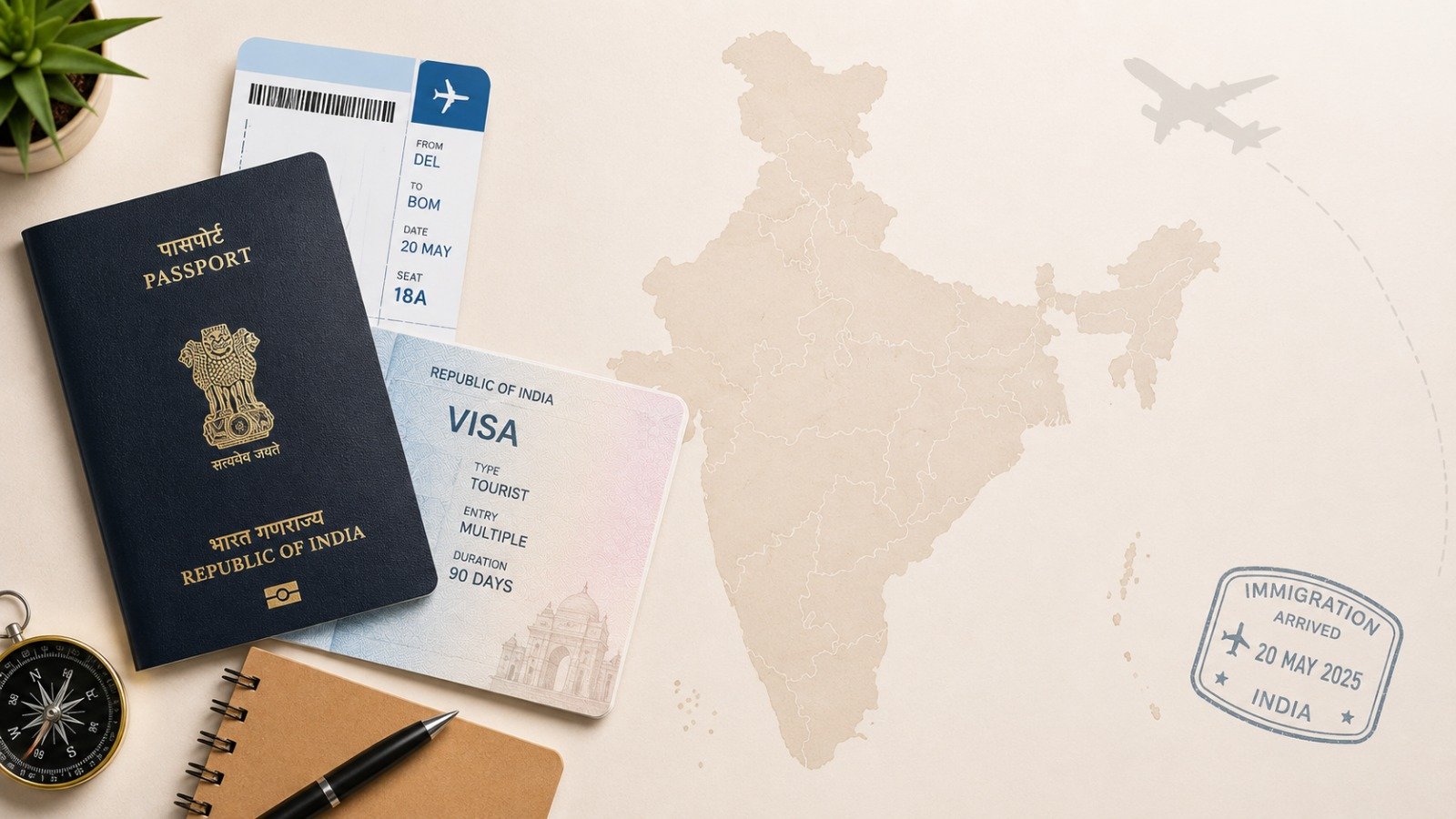
Planning a holiday to India? Most foreign nationals require a valid visa to enter India. Depending on your nationality, purpose of travel and length of stay, you may be eligible for an Indian e-Tourist Visa, a regular/paper visa, or, in limited cases, a Visa on Arrival.
At Limitless India Vacations, we help international travellers understand the Indian visa process and prepare for their journey to India.
Important: Indian visa rules, fees, eligibility and entry requirements can change. Travellers should always check the latest requirements before submitting a visa application. Please visit INDA E VISA PORTAL for more information.
Do I Need a Visa to Visit India?
Visa Rules for India – Who Needs a Visa?
Visa Rules for India require most foreign passport holders to obtain a valid Indian visa before travelling to the country.
For tourism, the e-Tourist Visa is often the most convenient option for nationals of eligible countries. Under the current Visa Rules for India, travellers who are not eligible for an e-Visa may need to apply for a regular visa through an Indian Embassy, Consulate or other authorised Indian Mission.
Some categories of travellers may be exempt from visa requirements under specific bilateral agreements or special arrangements. Because Visa Rules for India can vary according to nationality, passport type and purpose of travel, travellers should always verify the latest official requirements before departure.
Before Travelling, Check the Visa Rules for India
Before finalising your journey, check:
- Your nationality and passport type
- Whether your country is eligible for an Indian e-Visa
- The purpose of your visit
- Your passport validity
- The permitted duration of stay
- Your intended airport, seaport or land border
- Any additional entry requirements applicable to you
Checking the latest Visa Rules for India in advance can help avoid delays, documentation problems or difficulties at the time of boarding or arrival.
Visa rules for India (Indian e-Tourist Visa)
The Indian e-Tourist Visa allows eligible international travellers to visit India for tourism and certain other permitted activities.
It is applied for online before travelling and, once approved, an Electronic Travel Authorisation (ETA) is issued.
Common e-Tourist Visa options
| Visa | Validity | Entries | Stay in India |
|---|
| 30-Day e-Tourist Visa | 30 days | Double entry | As permitted by the visa |
| 1-Year e-Tourist Visa | 1 year from grant of ETA | Multiple entry | Maximum 180 days in a calendar year |
| 5-Year e-Tourist Visa | 5 years from grant of ETA | Multiple entry | Maximum 180 days in a calendar year |
The 30-day e-Tourist Visa has different validity rules from the 1-year and 5-year visas. The 30-day visa becomes valid from the first arrival in India and permits two entries within its validity period.
Visa validity is not the same as permitted stay. Travellers must follow the conditions and stay period stated for their particular visa.
Visa rules for India - Who Can Apply for an Indian e-Visa?
Indian e-Visa facilities are available to nationals of countries and territories listed by the Government of India.
Eligibility also depends on the purpose of travel and the applicant’s circumstances.
For tourism, permitted activities generally include:
- Holiday and sightseeing
- Visiting friends or relatives
- Short-term yoga programmes
- Certain short-term courses and activities permitted under the e-Visa rules
- Other activities specifically allowed under the relevant visa category
Not every nationality is eligible for an e-Visa, and certain passport holders may be subject to additional restrictions.
Always verify eligibility for your nationality before making travel arrangements.
Passport Requirements
Travellers applying for an Indian visa should ensure that their passport meets the applicable requirements.
As a general rule, the passport should have at least six months’ validity from the date of arrival in India and sufficient blank pages for immigration requirements.
Applicants should provide accurate passport details when completing the visa application.
Make sure:
- Your name matches your passport exactly
- Your passport number is entered correctly
- Your date of birth is correct
- Your nationality is correct
- Your passport has sufficient validity
- Your passport is not damaged
An incorrect passport number, name or other important information can create problems during travel.
Documents Normally Required for an Indian e-Visa
Depending on the visa category and nationality, applicants may be required to provide:
For a tourist e-Visa:
- Valid passport
- Recent passport-size photograph
- Scanned copy of the passport’s biographical page
- Travel and accommodation details, where applicable
- Additional information or documents if requested by the Indian authorities
The Indian e-Visa application requires a recent photograph and a copy of the passport information page.
Additional documentation may be required for particular nationalities or circumstances.
How to Apply for an Indian e-Visa
The general application process is:
1. Complete the online application
Enter your personal, passport and travel information carefully.
2. Upload the required documents
Upload your photograph and passport information page in the required format.
3. Pay the applicable visa fee
Visa fees vary according to nationality, visa category and other applicable conditions.
4. Receive your ETA
If approved, the Electronic Travel Authorisation is sent to the email address provided in the application.
5. Travel to India
Carry your passport and a copy of the approved e-Visa/ETA when travelling.
6. Immigration in India
Present your passport and visa documents at the designated immigration counter on arrival.
The Government of India’s published e-Visa process consists of online application, document upload, payment, receipt of the ETA and presentation at immigration on arrival. For more details on visa related informaion please visit INDIA E VISA
How Early Should I Apply?
Visa Rules for India – When Should You Apply?
Under the Visa Rules for India, travellers should not leave their Indian visa application until the last minute.
For many e-Visa categories, applications can be submitted in advance within the permitted application window. Current Visa Rules for India generally require eligible e-Visa applicants to apply at least 4 days before arrival, although the maximum advance-application period can vary depending on the visa category.
Our Recommendation
To follow the Visa Rules for India comfortably and avoid unnecessary stress, we recommend applying well before your planned departure. This allows additional time in case the authorities request clarification, supporting documents or further information.
Travellers should also avoid booking non-refundable travel solely on the assumption that a visa will be approved. Since Visa Rules for India and processing requirements can change, always check the latest official guidance before submitting your application.
Indian Visa on Arrival
India does not generally offer Visa on Arrival to all nationalities.
At present, the Government of India’s Visa-on-Arrival facility is available to:
- Japanese nationals
- South Korean nationals
- Certain UAE nationals who have previously obtained an Indian e-Visa or regular/paper visa
Additional conditions apply.
The Visa-on-Arrival facility is available only at designated international airports and is subject to eligibility requirements. It is not available to holders of diplomatic or official passports.
Important
Do not assume that you can obtain an Indian visa at the airport.
If you are not specifically eligible for India’s Visa-on-Arrival facility, you must obtain the appropriate Indian visa before travelling.
e-Arrival Card – Important Before Your Trip
The e-Arrival Card is not a visa.
Foreign nationals and OCI cardholders can submit the e-Arrival information online within 72 hours before arrival in India.
The service is free and is used to provide arrival information to Indian immigration authorities.
You may be asked for information such as:
- Passport details
- Personal information
- Date of arrival
- Purpose of visit
- Countries recently visited
- Address in India
- Contact details
- Emergency contact information
We recommend completing the e-Arrival Card before travelling to avoid unnecessary delays on arrival.
Entry Points for e-Visa Travellers
Indian e-Visas can only be used through designated immigration checkpoints.
These include designated international airports and seaports authorised for e-Visa entry.
Major e-Visa airports include:
Delhi • Mumbai • Bengaluru • Chennai • Hyderabad • Kolkata • Kochi • Goa • Ahmedabad • Jaipur • Varanasi • Amritsar • Lucknow • Bagdogra • Srinagar • Thiruvananthapuram • Pune • Port Blair
The Government of India’s list of authorised immigration checkpoints is subject to change, so travellers should verify their intended entry point before departure.
Regular / Paper Indian Visa
Travellers who are not eligible for an e-Visa, or who require a visa category that is not available electronically, may need to apply for a regular/paper visa through an Indian Mission abroad.
Regular visa categories can include:
- Tourist Visa
- Business Visa
- Employment Visa
- Student Visa
- Medical Visa
- Entry Visa
- Transit Visa
- Other specialised categories
The documentation, validity and processing requirements depend on the visa category and nationality.
Important Visa Rules for India to Remember
1. A visa does not automatically guarantee entry
The final decision to permit entry into India rests with the Indian immigration authorities.
2. Check your visa before travelling
Verify:
- Name
- Passport number
- Date of birth
- Nationality
- Visa type
- Validity
- Number of entries
- Permitted duration of stay
3. Do not overstay
Travellers must leave India before their permitted stay expires unless they have obtained the appropriate permission under Indian immigration rules.
4. Use the correct visa category
A tourist visa should not be used for activities that require another visa category.
5. Carry your documents
We recommend keeping digital and printed copies of:
- Passport
- Indian visa/ETA
- Flight tickets
- Hotel confirmations
- Travel insurance
- Important contact details
Frequently Asked Questions
Do I need a visa for India?
Most foreign nationals require a visa to enter India. Some nationalities and categories may be exempt under specific arrangements.
Can I get an Indian visa on arrival?
Only limited nationalities are eligible for India’s Visa-on-Arrival facility. It is not a general facility available to all tourists.
How long is an Indian tourist e-Visa valid?
The Indian e-Tourist Visa is available in different validity periods, including 30 days, 1 year and 5 years, depending on the option available to the applicant.
Can I stay in India for 180 days on a tourist e-Visa?
For the 1-year and 5-year e-Tourist Visa, the Government of India states that the maximum stay in India during a calendar year should not exceed 180 days. The applicable conditions of your visa should always be checked.
Can I extend my e-Tourist Visa while in India?
The e-Tourist Visa is generally non-extendable and non-convertible.
Is the e-Arrival Card the same as an Indian visa?
No. The e-Arrival Card is an arrival-information form and does not replace a visa.
How much does an Indian visa cost?
Indian visa fees vary according to nationality, visa type and other applicable factors. Applicants should check the current fee applicable to their nationality before applying.
Can Limitless India Vacations help with my Indian visa?
Yes. Limitless India Vacations can assist international travellers with understanding the Indian visa process, document requirements and application procedure.
Visa approval, however, is solely at the discretion of the Government of India and its immigration authorities.
Need Help With Your India Visa?
Planning a holiday to India can involve more than choosing the right itinerary. We can help you understand the visa requirements applicable to your nationality and travel plans.
Contact Limitless India Vacations for assistance with:
✓ Indian e-Tourist Visa information
✓ Visa application guidance
✓ Document checklist
✓ India holiday planning
✓ Airport transfers
✓ Hotels and accommodation
✓ Private tours and tailor-made itineraries
Plan Your India Holiday With Us
From the Taj Mahal and Rajasthan’s palaces to Kerala’s backwaters, the Himalayas and India’s vibrant cities — let us help you plan your journey.
Contact us today to start planning your India holiday. For more infor for VISA please visit