









Responsible Tourism in India
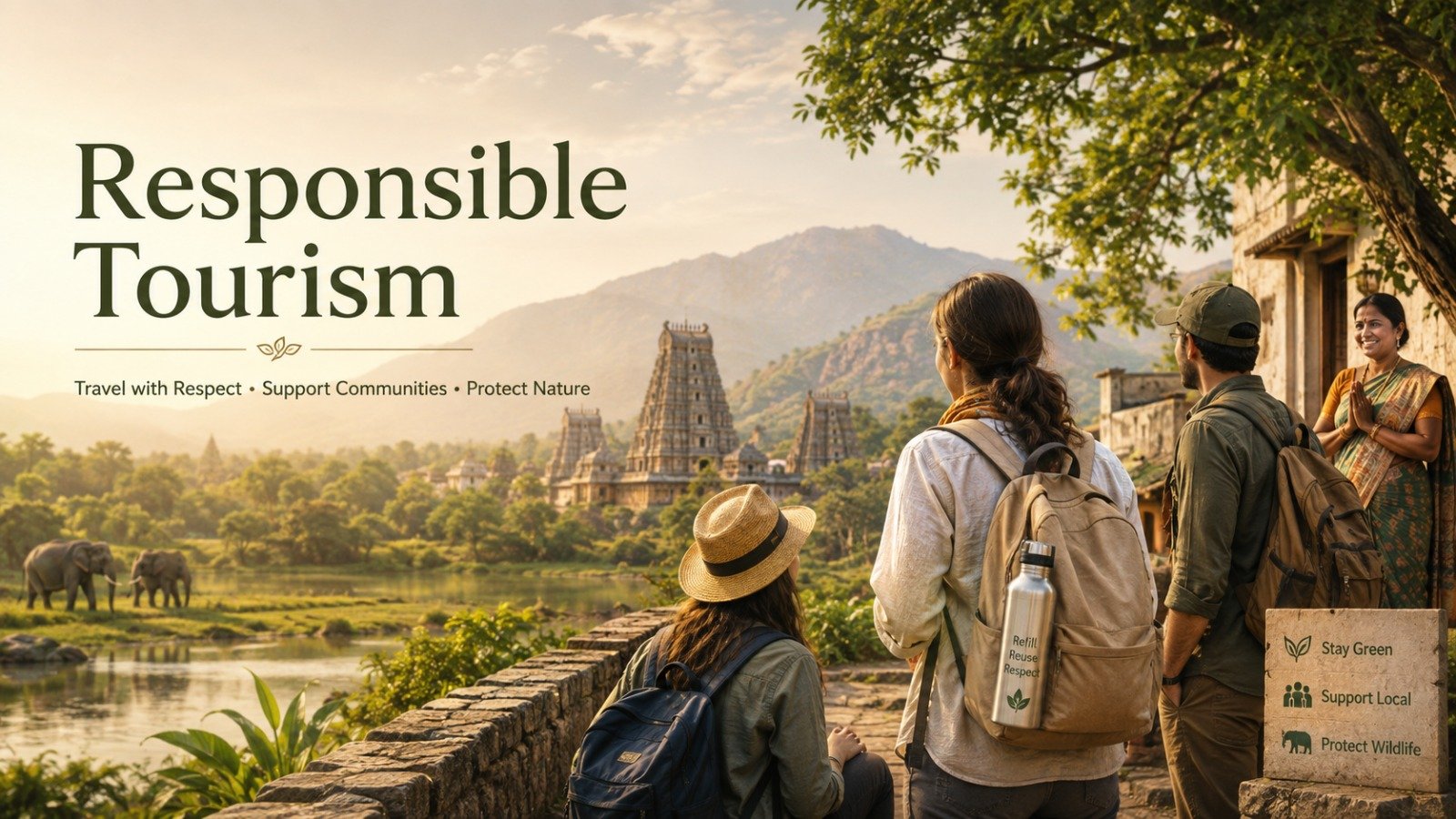
Responsible Tourism in India
Responsible Tourism in India is about experiencing the country’s extraordinary cultures, landscapes, wildlife and heritage while ensuring that travel creates a positive impact on the places and people we visit.
India offers an astonishing diversity of experiences — ancient monuments, Himalayan landscapes, wildlife reserves, colourful festivals, rural communities, sacred cities, beaches, forests and centuries-old traditions. Yet every journey also affects the environment, local communities and cultural heritage of a destination.
At Limitless India Vacations, we believe travel should be memorable not only for the traveller but also beneficial and respectful to the destinations that welcome us. Our approach encourages visitors to explore India thoughtfully, support local communities, respect cultural traditions, protect wildlife and minimise unnecessary environmental impact.
Travel Responsibly. Experience India. Leave a Positive Footprint.
Our Approach to Responsible Tourism in India
Practising Responsible Tourism in India does not mean sacrificing comfort, enjoyment or memorable experiences. It means making thoughtful travel choices that help preserve destinations while allowing local communities to benefit from tourism.
Wherever practical, we encourage travellers to choose experiences that respect:
- Local communities
- Cultural traditions
- Wildlife and natural habitats
- Historic monuments and heritage
- The environment
- Local livelihoods
- Regional arts and crafts
Small individual decisions can collectively make a meaningful difference.
Travellers interested in responsible wildlife experiences can explore our Tiger Tours India itinerary, combining the Golden Triangle with safari experiences in Ranthambore while encouraging respectful wildlife viewing and protection of natural habitats.
Respect the Environment While Travelling
India’s environment ranges from fragile Himalayan ecosystems and tropical forests to deserts, coastlines, wetlands and wildlife reserves.
Travellers can help protect these landscapes through simple actions:
- Avoid single-use plastic wherever possible
- Carry reusable water bottles
- Never litter
- Dispose of waste responsibly
- Conserve water
- Switch off lights and air conditioning when not required
- Follow local environmental regulations
- Avoid disturbing natural habitats
- Stay on designated trails in environmentally sensitive areas
Responsible travel begins with recognising that beautiful places remain beautiful only when visitors help protect them.
Travellers interested in nature and conservation can explore our wildlife itinerary, which combines carefully planned safaris with responsible wildlife viewing and respect for protected habitats.
Support Local Communities
One of the most important principles of Responsible Tourism in India is ensuring that tourism creates opportunities for the people who live in the destinations travellers visit.
India’s tourism industry supports millions of guides, drivers, hotel employees, artisans, restaurant workers, craftsmen and small business owners.
Where practical, travellers can support local economies by choosing:
- Local guides
- Locally owned restaurants
- Family-run accommodation
- Local transportation providers
- Community-based experiences
- Village activities
- Local markets
- Independent artisans
- Traditional craft producers
Spending money locally allows a greater share of tourism income to remain within the destination.
Respect Indian Culture and Traditions
India’s cultural diversity is one of the country’s greatest attractions. Languages, religions, cuisine, clothing, architecture and customs can change dramatically from one region to another.
Travellers should approach these differences with curiosity and respect.
We encourage our guests to:
- Dress appropriately when visiting religious places
- Remove shoes wherever required
- Respect photography restrictions
- Ask permission before photographing people
- Avoid interrupting religious ceremonies
- Follow temple, mosque, monastery and shrine regulations
- Respect local customs
- Avoid intrusive behaviour
- Treat sacred places with sensitivity
Understanding local etiquette can transform a simple sightseeing visit into a more meaningful cultural encounter.
Responsible Wildlife Tourism in India
India is one of the world’s great wildlife destinations and is home to tigers, Asian elephants, one-horned rhinoceroses, leopards, snow leopards, lions, crocodiles and hundreds of bird species.
Wildlife tourism can contribute significantly to conservation when it is conducted responsibly.
An important part of Responsible Tourism in India is ensuring that wildlife experiences prioritise the welfare of animals and the protection of natural habitats.
During safaris and other wildlife activities:
- Maintain a safe distance from animals
- Never feed wildlife
- Never attempt to touch or attract wild animals
- Keep noise to a minimum
- Follow instructions from guides and forest officials
- Stay within authorised safari routes
- Never leave rubbish inside protected areas
- Avoid activities that exploit animals
- Respect park rules and safari timings
The finest wildlife encounters happen when animals are observed behaving naturally in their own environment.
Protect India’s Cultural Heritage
India’s history stretches across thousands of years and is reflected in an extraordinary collection of forts, palaces, temples, monasteries, mosques, archaeological sites and historic cities.
From the Taj Mahal and Rajasthan’s magnificent forts to Buddhist heritage sites and the ancient temples of South India, these monuments form an irreplaceable part of India’s cultural legacy.
When visiting historic sites:
- Do not carve names or graffiti on monuments
- Avoid unnecessarily touching fragile structures
- Follow designated visitor routes
- Never remove stones or archaeological material
- Follow photography regulations
- Dispose of waste responsibly
- Respect restricted areas
- Follow instructions issued by conservation authorities
Protecting historic monuments ensures that future generations can experience them as we do today.
Support Local Artisans and Traditional Crafts
India possesses one of the world’s richest traditions of handicrafts.
Across the country, generations of artisans continue specialised skills such as:
- Hand-block printing
- Textiles and weaving
- Carpets
- Pottery
- Jewellery
- Wood carving
- Metalwork
- Embroidery
- Traditional painting
- Basketry
- Stone carving
Supporting genuine local craftsmanship is another practical way of promoting Responsible Tourism in India.
Where possible, travellers can purchase authentic products directly from established artisans, cooperatives or reputable craft organisations.
Such purchases help preserve traditional skills while creating economic opportunities for local families.
Experience Regional Food Responsibly
Food is one of the most enjoyable ways to understand India.
Every region has its own cuisine, ingredients and culinary traditions. Travellers can discover Punjabi dishes, Rajasthani thalis, Bengali sweets, Gujarati cuisine, South Indian meals, Goan flavours and Kerala’s distinctive culinary traditions.
Eating at reputable local restaurants can support local businesses while allowing travellers to experience regional culture.
Choose establishments that maintain appropriate hygiene standards and respect local food traditions.
Reduce Plastic and Unnecessary Waste
Plastic waste has become an environmental challenge in many tourism destinations around the world, including India.
Travellers can reduce their impact by:
- Carrying reusable bottles
- Using reusable shopping bags
- Avoiding unnecessary plastic packaging
- Refusing disposable plastic items when alternatives are available
- Disposing of rubbish only in appropriate places
Individual actions may appear small, but the combined choices of thousands of travellers can have a substantial impact.
Remember That Destinations Are People’s Homes
Popular destinations are not simply tourist attractions. They are also communities where people live, work, worship and raise families.
Visitors should behave with the same consideration they would expect from guests in their own neighbourhood.
We encourage travellers to:
- Respect personal space
- Be patient
- Ask before entering private areas
- Seek permission before photographing people
- Avoid intrusive behaviour
- Be considerate in residential areas
- Respect religious and cultural practices
- Interact politely with local communities
Respect between visitors and residents lies at the heart of responsible travel.
Travel Beyond India’s Famous Attractions
Responsible Tourism in India can also involve exploring destinations beyond the country’s most famous landmarks.
India has thousands of fascinating places that receive comparatively few international visitors.
Travelling beyond established tourism circuits can introduce visitors to:
- Small towns
- Rural communities
- Lesser-known historic sites
- Regional markets
- Traditional crafts
- Local cuisine
- Village experiences
- Nature reserves
- Local festivals
Distributing tourism across a wider range of destinations can reduce pressure on heavily visited sites while creating economic opportunities in smaller communities.
Travel at a Comfortable Pace
Responsible travel is not solely about environmental sustainability. It is also about experiencing destinations meaningfully.
Trying to visit too many cities within a short itinerary often results in long road journeys, repeated flights and limited time actually experiencing each destination.
A slower journey allows travellers to:
- Understand local culture
- Spend more time at important attractions
- Experience regional cuisine
- Explore local markets
- Meet local communities
- Discover less-visited places
- Reduce unnecessary transportation
- Enjoy a more relaxed holiday
Sometimes travelling to fewer places allows you to experience considerably more.
How to Practise Responsible Tourism in India
Visitors do not need to completely change the way they travel. A few simple principles can make any journey more responsible.
Respect
Respect local people, religions, traditions and cultural practices.
Reduce
Reduce waste, plastic consumption and unnecessary use of water and energy.
Support
Support local businesses, guides, artisans, restaurants and communities.
Protect
Help protect India’s wildlife, landscapes and cultural heritage.
Learn
Take time to understand the history, traditions and people of the destinations you visit.
Share
Encourage fellow travellers to adopt thoughtful and responsible travel practices.
These simple principles help transform tourism into a positive force for both travellers and host communities.
Our Commitment to Responsible Tourism in India
At Limitless India Vacations, we aim to incorporate the principles of Responsible Tourism in India into the journeys we plan.
We work with hotels, guides, drivers, destination partners and service providers throughout the country and encourage travel practices that respect communities, cultural heritage, wildlife and the natural environment.
Where practical, we aim to create itineraries that allow travellers to experience destinations at a comfortable pace while supporting local tourism economies. Please Discover Kerala’s backwaters, villages and coastal landscapes through our carefully planned Kerala itinerary, designed to combine memorable travel experiences with responsible tourism practices
We recognise that responsible tourism is an ongoing process rather than a single achievement. Travel companies, travellers, destinations and local communities all have a role to play.
Our objective is straightforward: tourism should create enriching experiences for travellers while making a positive contribution to the destinations that welcome them.
Travel With Purpose
India has an incredible story to tell.
It is a story shaped by ancient civilisations, living traditions, extraordinary landscapes, diverse communities and remarkable wildlife.
Travelling responsibly allows visitors to become part of that story without diminishing what makes India special.
Explore India. Respect India. Help Preserve India.
Start Your Responsible India Journey
Looking for an India holiday combining iconic attractions with authentic cultural experiences?
Limitless India Vacations creates tailor-made journeys across the country based on your interests, available time and preferred style of travel.
From Rajasthan and the Golden Triangle to Kerala, South India, the Himalayas, wildlife reserves and India’s cultural heartlands, our team can help you discover the country thoughtfully and comfortably.
Whether you are planning your first visit or returning to explore another region, our goal is to create journeys that are memorable, meaningful and respectful of the places you visit.
Travellers exploring Kerala can experience its backwaters, local communities and natural landscapes through thoughtfully planned journeys such as our Kerala itinerary, while supporting responsible and respectful travel practices.
Travel with us. Experience India. Leave a positive footprint.
A Note to Our Travellers
Responsible tourism is a shared responsibility.
No individual traveller or travel company can resolve every environmental, cultural or social challenge associated with tourism. However, millions of thoughtful decisions made by travellers, tourism businesses and destinations can collectively create meaningful change.
We encourage every traveller to respect local laws, follow guidance issued by authorities, protect the environment and approach India’s people and traditions with curiosity and respect.
By embracing Responsible Tourism in India, we can help ensure that the country’s remarkable heritage, wildlife, landscapes and cultures continue to inspire travellers for generations to come.
Travellers can also learn more about responsible and sustainable tourism principles through UN Tourism
Last reviewed: August 2026
© Limitless India Vacations