









Protected / Restrictred Areas in India
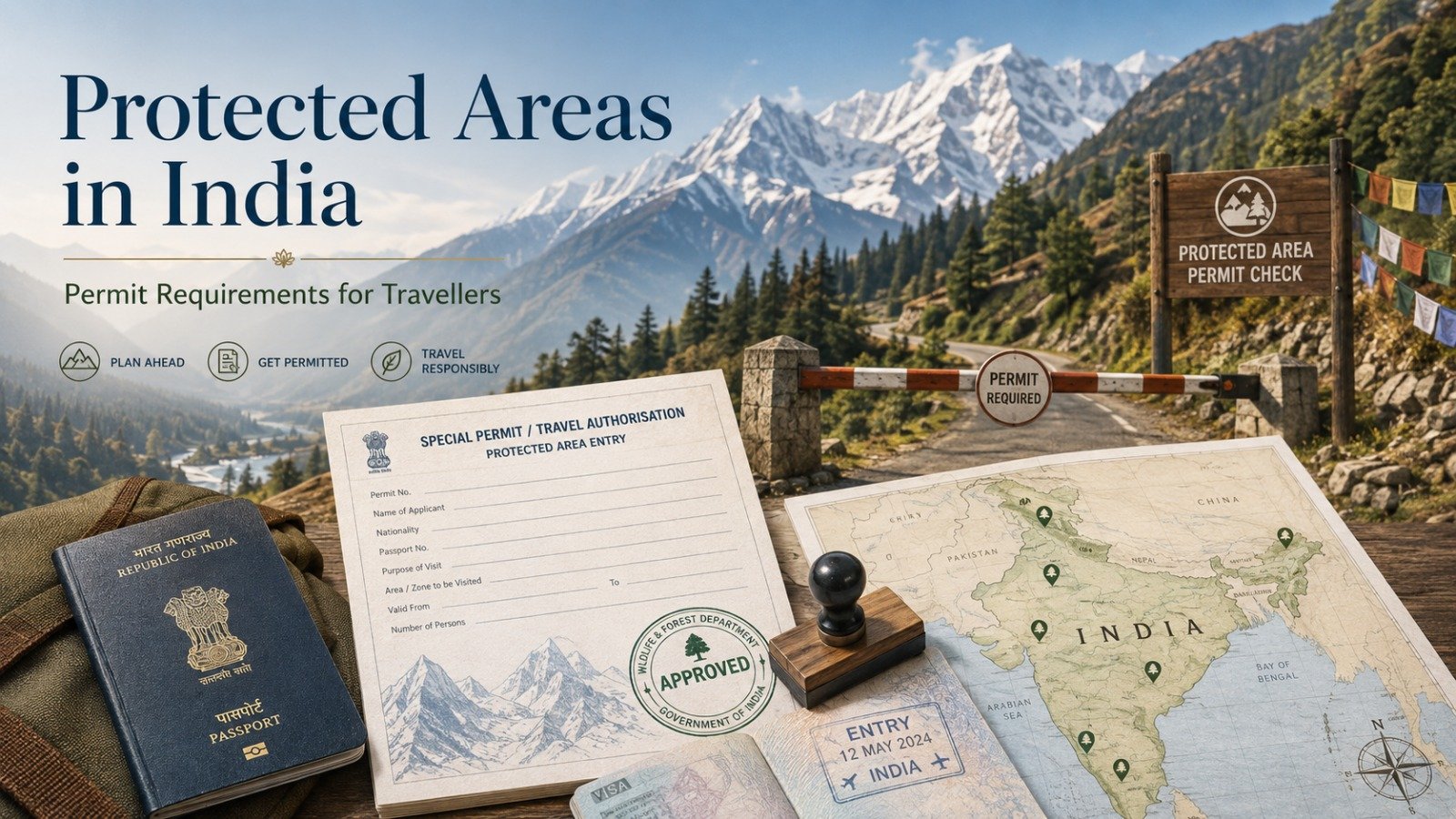
Visa
Most international travellers require a valid Indian Visa or e-Visa before entering the country. Ensure your visa type matches the purpose of your visit. Understanding the latest Travel Rules for India can help travellers avoid problems with documentation and entry requirements.
Important Information for International Travellers
Protected Areas in India include sensitive border regions, remote Himalayan territories, selected areas of the Northeast, island territories and protected tribal regions where special entry, travel or permit regulations may apply.
India welcomes travellers from around the world, but certain parts of the country are subject to special entry, travel and permit regulations. These restrictions generally apply to sensitive border regions, certain areas of the Northeast, parts of the Himalayas, island territories and protected tribal areas.
Depending on your nationality and destination, you may need a Protected Area Permit (PAP), Restricted Area Permit (RAP), Inner Line Permit (ILP) or another form of official permission.
Travellers planning to visit Protected Areas in India should therefore check the applicable permit requirements before confirming flights, accommodation or transportation.
At Limitless India Vacations, we recommend checking the applicable requirements before finalising an itinerary to any restricted or protected destination.
What Are Protected & Restricted Areas?
India uses different permit systems for certain sensitive regions. Understanding how Protected Areas in India are regulated can help travellers avoid confusion between permits, visas and local entry requirements.
Protected Area
A Protected Area generally refers to an area where foreign nationals may require special permission to visit.
These areas are mainly located along India’s international borders or in other strategically sensitive regions.
Restricted Area
A Restricted Area is a region where additional travel or entry controls may apply to visitors, including foreign nationals.
Inner Line Permit
An Inner Line Permit (ILP) is a travel document required for entry into certain states or areas.
ILP requirements primarily apply to Indian citizens from outside the relevant state, but some destinations may have additional requirements or restrictions for foreign visitors.
The rules are not identical everywhere.
Why Are Certain Areas Restricted?
Restrictions governing Protected Areas in India may be introduced because of:
- India’s international borders
- National security considerations
- Sensitive ecological areas
- Protection of indigenous communities
- Tribal areas
- Geographical isolation
- Environmental conservation
- Local administrative regulations
The purpose of these regulations is generally to balance tourism with security, environmental protection and the interests of local communities.
Areas Where Foreign Travellers May Need Special Permission
Several Protected Areas in India and other sensitive destinations can involve additional permit requirements or special regulations for foreign visitors.
1. Arunachal Pradesh
Arunachal Pradesh is one of India’s most spectacular Himalayan states and shares international borders with several countries.
Foreign visitors generally require appropriate permission to visit the state.
Popular destinations include:
- Tawang
- Bomdila
- Dirang
- Ziro
- Itanagar
- Pasighat
- Along
- Mechuka
Important
Foreign nationals should check the latest Protected Area Permit (PAP) requirements before planning travel to Arunachal Pradesh.
Permit conditions can vary according to nationality and itinerary.
2. Sikkim
Sikkim is a Himalayan state bordering China, Nepal and Bhutan.
Most of Sikkim is accessible to tourists, but certain high-altitude and border areas have additional permit requirements.
Popular areas that may involve special permits:
- Nathula Pass
- Tsomgo Lake
- North Sikkim
- Gurudongmar Lake
- Yumthang and surrounding areas
Foreign visitors may face additional restrictions compared with Indian citizens.
Important
Access to particular border areas can depend on current security conditions and local authorities.
3. Ladakh
Ladakh is a high-altitude Himalayan region with several sensitive border areas.
Most major tourist destinations are accessible, but certain areas near international borders may require permits or be subject to restrictions.
Popular areas requiring attention:
- Pangong Lake
- Nubra Valley
- Tso Moriri
- Hanle
- Certain border routes
Permit requirements can change according to local regulations and security conditions.
Travellers should check the latest rules before travelling beyond the main tourist areas.
4. Himachal Pradesh
Most of Himachal Pradesh is freely accessible to foreign tourists.
However, some border areas and specific locations may be subject to additional permissions or restrictions.
Examples can include sensitive areas close to the international border.
Popular tourist destinations such as:
- Shimla
- Manali
- Dharamsala
- Dalhousie
- Spiti
are generally accessible, but specific routes and border areas may have additional requirements.
5. Uttarakhand
Most tourist destinations in Uttarakhand are accessible without special permits.
However, certain areas close to India’s international borders can have additional regulations.
This is particularly relevant for some remote Himalayan routes.
Popular tourist destinations include:
- Rishikesh
- Haridwar
- Mussoorie
- Nainital
- Auli
- Valley of Flowers
Foreign travellers should check current requirements when planning travel to remote border areas.
6. Andaman & Nicobar Islands
The Andaman and Nicobar Islands are an important example of an area where environmental and tribal protection is particularly important.
Foreign tourists can visit permitted tourist areas, but access to certain islands and protected tribal territories is strictly controlled.
Important
Visitors must not attempt to enter protected tribal reserves or restricted islands.
Some indigenous communities live in voluntary isolation, and Indian law protects their privacy and territory.
Tourists should never attempt to approach, photograph or interact with protected tribal communities unless specifically permitted by the authorities.
7. Lakshadweep
Lakshadweep is a group of beautiful coral islands in the Arabian Sea.
Entry is regulated, and travellers require the appropriate permission to visit.
Foreign visitors may also face restrictions concerning which islands they can visit.
Popular islands include:
- Agatti
- Bangaram
- Kadmat
- Kavaratti
Always check the latest entry and permit requirements before planning a Lakshadweep holiday.
8. Northeast India
Several parts of India’s Northeast have special travel regulations because of their proximity to international borders and the presence of sensitive ecological and cultural areas.
The situation varies from state to state, and travellers should not assume that the regulations applying to one destination also apply elsewhere.
Travellers should check the current requirements for:
- Arunachal Pradesh
- Nagaland
- Mizoram
- Manipur
- Sikkim
- Meghalaya
- Tripura
- Assam
Not every state or destination requires the same permit.
Inner Line Permit (ILP)
The Inner Line Permit is a special permit system used in certain Indian states.
The states where ILP systems are particularly relevant include:
- Arunachal Pradesh
- Nagaland
- Mizoram
- Manipur
The exact requirements and eligibility rules can change, and foreign nationals may be subject to different arrangements.
Important
An ILP should not be confused with a visa.
A foreign visitor may require an Indian visa and, where applicable, additional permission for a particular destination.
Protected Tribal Areas
Some Protected Areas in India exist specifically to safeguard indigenous and tribal communities and preserve their privacy, cultural traditions and way of life.
India is home to numerous indigenous and tribal communities with unique cultures and traditions.
Certain areas are protected to safeguard communities from unwanted outside contact and to preserve their way of life.
Travellers should never:
- Enter protected tribal reserves
- Attempt to make contact with isolated communities
- Offer food or gifts
- Take photographs without permission
- Approach tribal settlements without authorisation
- Attempt to arrange unauthorised visits
Responsible tourism means respecting communities’ rights, privacy and cultural traditions.
Border Areas
A significant number of Protected Areas in India are located close to international borders, where additional travel restrictions may apply.
Travel may be permitted in designated areas, but additional restrictions can apply.
Examples include areas near:
- China
- Pakistan
- Nepal
- Bhutan
- Bangladesh
- Myanmar
A destination may be geographically close to a border without being completely closed to tourists.
However, travelling beyond designated tourist zones can require additional permission.
Do I Need a Permit?
There is no single permit requirement for all of India.
Whether you need special permission depends on:
- Your nationality
- Your passport
- Your destination
- Your proposed route
- Whether you are travelling independently or with an authorised tour operator
- Current government regulations
- Local security conditions
For this reason, anyone planning to visit Protected Areas in India should check permit requirements before confirming the itinerary.
PAP, RAP & ILP – What’s the Difference?
| Permit | General Purpose | Who May Need It? |
|---|---|---|
| PAP | Protected Area Permit | Certain foreign visitors travelling to protected areas |
| RAP | Restricted Area Permit | Visitors travelling to designated restricted areas |
| ILP | Inner Line Permit | Entry into certain states/areas subject to ILP regulations |
| Visa | Permission to enter India | Foreign nationals who require an Indian visa |
A permit does not replace an Indian visa.
A traveller may need both an appropriate Indian visa and a separate permit.
Can Limitless India Vacations Arrange Permits?
Where applicable, Limitless India Vacations can assist travellers in understanding the permit requirements associated with their itinerary and coordinate the necessary arrangements through appropriate local channels.
This can be particularly important when an itinerary includes Protected Areas in India, remote border regions or destinations where entry procedures differ from standard tourist areas.
Permit approval is subject to the relevant Government of India authorities and local administration.
We recommend providing passport details and your proposed itinerary well in advance if your journey includes a restricted or protected destination.
Documents You May Need
Depending on the destination and permit, travellers may be asked to provide:
- Passport
- Valid Indian visa
- Passport photographs
- Travel itinerary
- Hotel details
- Transportation details
- Details of accompanying travellers
- Additional information requested by the authorities
Requirements vary by destination.
Important Tips for Travelling to Restricted Areas
Plan Early
Do not leave permit arrangements until the day before travelling.
Carry Your Documents
Keep your passport, visa and permits readily available.
Follow the Approved Route
If your permit specifies a route or destination, do not travel beyond the permitted area.
Respect Local Instructions
Security and local authorities may impose temporary restrictions.
Be Flexible
Weather, security conditions or administrative decisions can sometimes affect access to remote areas.
Do Not Photograph Sensitive Installations
Avoid photographing military installations, border infrastructure or other restricted facilities.
Remote Himalayan Travel
Many Protected Areas in India and other permit-sensitive destinations are located in spectacular but remote Himalayan regions.
These include:
- Tawang
- Spiti
- Ladakh
- Nubra Valley
- Pangong Lake
- North Sikkim
- Uttarakhand’s border regions
Travellers should understand that remote travel can involve:
- High altitude
- Limited medical facilities
- Difficult roads
- Unpredictable weather
- Limited mobile connectivity
- Permit requirements
A properly planned itinerary and experienced local support are strongly recommended.
Travel Responsibly
Restricted and protected destinations often have fragile environments and culturally sensitive communities.
Visitors should:
✓ Respect local communities
✓ Follow permit conditions
✓ Avoid littering
✓ Protect the environment
✓ Respect wildlife
✓ Follow photography restrictions
✓ Avoid unnecessary plastic
✓ Follow instructions from authorities
Responsible travel helps protect these remarkable destinations for future generations.
Frequently Asked Questions
Can foreign tourists visit restricted areas in India?
Yes, foreign tourists can visit many Protected Areas in India and other restricted destinations, but additional permission may be required depending on the destination and nationality.
Is a Protected Area Permit the same as an Indian visa?
No. A PAP or other special permit is separate from an Indian visa.
Can I visit Arunachal Pradesh as a foreign tourist?
Foreign visitors can travel to permitted parts of Arunachal Pradesh subject to the applicable visa and Protected Area Permit requirements.
Can foreigners visit Tawang?
Foreign visitors may be permitted to visit Tawang subject to the current Protected Area Permit rules and other applicable regulations.
Can foreigners visit Pangong Lake?
Foreign tourists can visit permitted parts of Ladakh, but certain areas near sensitive borders may have additional restrictions or permit requirements.
Can I visit the tribal areas of the Andaman Islands?
No. Protected tribal reserves and certain islands are subject to strict protection and are not tourist attractions.
Do I need a permit for Sikkim?
Most tourist areas do not require the same level of permission, but certain border and high-altitude areas have additional permit requirements. Foreign nationals may face specific restrictions.
Can permit rules change?
Yes. Permit requirements and access restrictions can change due to security, environmental, administrative or local conditions.
Always check the latest official requirements before travelling.
Planning a Special India Journey?
If your dream trip includes Ladakh, Sikkim, Arunachal Pradesh, Northeast India, remote Himalayan valleys or other sensitive regions, careful planning is essential.
Journeys involving Protected Areas in India should be planned with particular attention to permits, approved routes, documentation and current local regulations.
Limitless India Vacations can help coordinate your itinerary, transportation, accommodation, guides and applicable permit arrangements.
We can arrange:
✓ Tailor-made itineraries
✓ Private tours
✓ Protected-area travel assistance
✓ Permit guidance
✓ Hotels and accommodation
✓ Chauffeur-driven vehicles
✓ Local guides
✓ Domestic flights
✓ Train journeys
✓ Airport transfers
✓ India visa assistance
Explore Beyond the Ordinary
Discover India’s mountains, cultures and remote landscapes — responsibly and with the right permissions.
Important Information
Permit and entry requirements for Protected Areas in India can vary according to nationality, destination, route and prevailing government regulations.
Security conditions may result in temporary restrictions or changes to permitted routes.
The information on this page is provided as general travel guidance and should not be treated as confirmation that a particular permit will be granted.
Travellers should verify the latest requirements with the relevant Indian authorities before travelling.
For official information on Protected Area Permits, Restricted Area Permits and entry regulations, travellers should refer to the Ministry of Home Affairs, Government of India.
Last reviewed: August 2026
© Limitless Vacations